
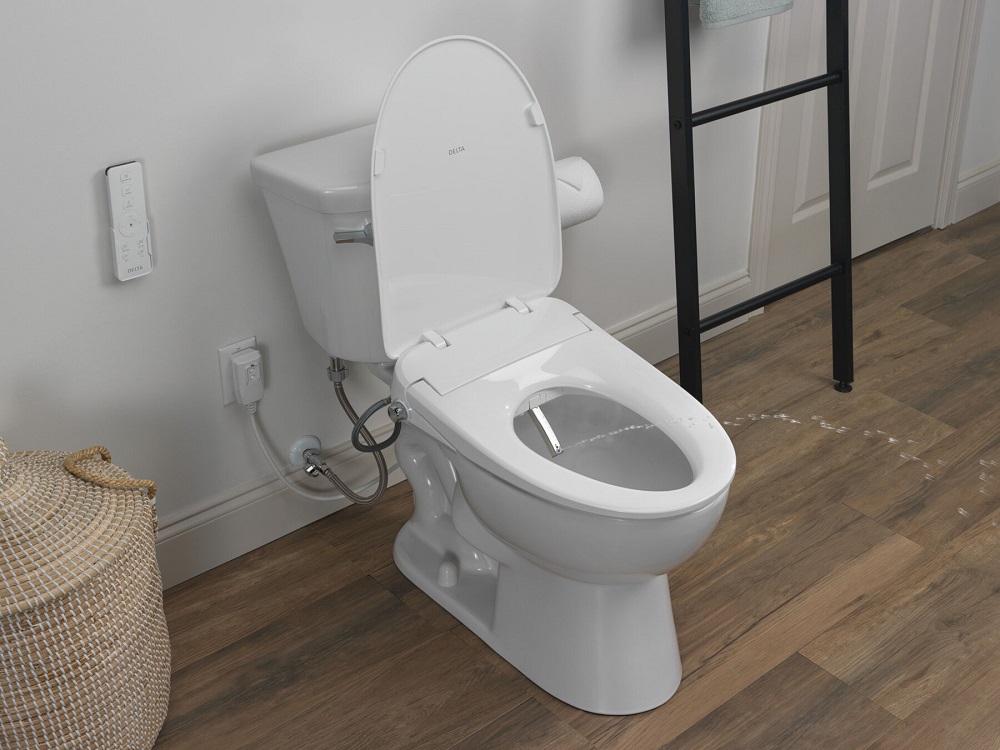

Ask most Australians what a bidet is and they’ll picture a simple cold-water spray, the sort of clip-on attachment that’s become a common bathroom upgrade over the last few years. Ask them what an electronic bidet does, and the answer is usually a lot vaguer — “the fancy one with buttons,” maybe. That gap in understanding is worth closing, because an electric bidet seat isn’t just a cold-water attachment with extra plastic. It’s a genuinely different piece of bathroom hardware, and the difference shows up the moment you actually use one.
An electronic bidet seat replaces the entire toilet seat and lid, wiring into a nearby power point to run heating, drying and control functions that a manual attachment simply can’t offer. For households weighing up whether that jump in cost and installation complexity is worth it, understanding exactly what an electronic bidet adds — and where a manual unit is genuinely good enough — makes the decision a lot easier.
Manual vs Electronic: Where the Line Actually Sits
A manual, non-electric bidet attachment is a mechanical unit that diverts water from the existing toilet’s cold supply line through a small handle-operated valve. It’s inexpensive, simple to install, and does the core job of a water wash perfectly well. What it can’t do is control temperature, dry the user afterwards, or offer more than a single basic spray pattern.
An electric bidet seat changes the equation by adding a power source into the mix. That single addition brings a genuinely different feature set within reach: warmed water instead of cold, a heated seat surface, warm air drying, and — on most mid-to-premium models — multiple wash modes with adjustable pressure and nozzle position. For anyone who has tried a manual attachment in the middle of a Perth winter and found the cold-water spray far less appealing at 6am than it sounded in the shower brochure, this is the difference that actually matters day to day.
The Feature Set Worth Understanding Before You Choose
Electronic bidet seats vary a lot between models, but the features that consistently show up on well-specified units include:
- Adjustable water temperature and pressure, controlled via a remote or side panel rather than fixed at whatever comes out of the cold tap
- Oscillating and pulsating spray settings, which move the water stream during the wash cycle rather than delivering a single fixed jet
- An extendable, self-cleaning nozzle that retracts out of sight and rinses itself before and after each use
- Warm air drying, removing the need to reach for a towel or paper afterwards
- Antimicrobial seat surfaces on higher-spec units, which resist bacterial growth on the surface itself rather than relying solely on regular cleaning
- Soft-close hinges and a quick-release seat and cover, which make routine cleaning noticeably easier than wrestling with standard toilet seat fixings
None of these are gimmicks — each one solves a specific, ordinary complaint people have about standard toilets, from cold seats in winter to the fiddly job of cleaning around seat hinges.
Compatibility: The Detail That Determines Whether It Actually Fits
This is where electronic bidet seats get more complicated than manual ones, and it’s the single biggest reason to get advice before ordering online. Electric bidet seats are designed to fit specific toilet pan shapes and bolt-hole spacings, and not every seat fits every pan. Some ranges — the Caroma Livewell electronic bidet is a good example — are engineered to suit GWA-brand pans specifically, with other pan compatibility depending on the model and adaptor kit used.
Beyond the physical fit, every electric bidet installation in Australia needs to meet AS/NZS 3500.1 plumbing standards, and most models require dual check valves and an air gap to prevent backflow contamination into the drinking water supply — a compliance detail your plumber will handle, but one worth knowing about so you understand why a licensed installer is non-negotiable rather than optional. Depending on your local council and existing plumbing configuration, additional backflow prevention devices may also need separate approval.
Where Electric Bidet Seats Are Used Beyond the Family Bathroom
While plenty of the demand for electronic bidets comes from ordinary home renovations, it’s worth knowing that this category of product is also widely specified in care, commercial and residential settings where hygiene and ease of use matter even more than usual. Units built for this broader market — the Caroma Livewell electronic bidet is one local example — are typically load-rated well beyond a standard seat (often to around 250kg), built with antimicrobial surfaces as standard, and designed with soft-close, quick-release fittings that make servicing simple in high-turnover settings like aged care facilities.
It’s worth being precise about what “accessible” means here, though. A product being independent-living friendly and easy to use isn’t automatically the same as meeting the specific AS1428.1 accessible or ambulant design standards used for compliant accessible bathrooms — those are separate, stricter technical requirements. If a bathroom needs to meet formal accessibility compliance, that’s a conversation to have with an occupational therapist or accessibility consultant before choosing a specific unit, rather than assuming any electronic bidet automatically ticks that box.
When a Manual Bidet Is Actually the Better Choice
It’s worth being upfront about this, because not every household needs to spend up on an electronic unit. If budget is tight, if the bathroom in question is a rarely-used guest toilet, or if you’re renting and can’t justify permanent electrical work, a manual cold-water attachment still delivers the core hygiene benefit at a fraction of the cost and complexity. The honest advice most installers give is that electronic bidets earn their price premium in the bathrooms your household uses daily — main bathrooms and ensuites — rather than in every toilet in the house.
There’s also a simple practical filter worth applying: if there’s no power point within safe reach of the toilet and you’re not planning any other electrical work in that room, the cost of running new wiring can tip the economics back toward a manual unit, at least for now.
Maintenance and Longevity
Electronic bidet seats are lower-maintenance than people expect, mostly because the self-cleaning nozzle function handles the part that would otherwise require manual scrubbing. That said, a few habits extend the life of the unit noticeably. Wiping down the exterior casing with a non-abrasive cloth (rather than harsh bathroom chemical sprays, which can degrade seals over time) protects the electronics. In areas with harder water, an inline filter on the bidet’s water feed reduces mineral buildup inside the nozzle mechanism. And because these units have a control board and pump rather than just a mechanical valve, it’s worth confirming what the manufacturer’s warranty actually covers — some cover the seat and mechanical parts for several years but treat electronic components separately, so it pays to read the fine print before assuming full coverage.
Common Questions About Electric Bidet Seats
Do they work during a power outage? Most units default to no function at all without power, since the wash relies on an electric pump — worth knowing if you live somewhere prone to outages, though this is rarely a deciding factor for most households.
Can they be installed on any existing toilet? Not always. Pan shape, bolt spacing and even cistern height can affect fit, which is why checking compatibility against your specific existing pan before ordering matters more with electronic units than with universal manual attachments.
Are they hygienic for shared or multi-person households? Genuinely, yes — arguably more so than a standard toilet, since the self-cleaning nozzle and antimicrobial seat surfaces (on higher-spec models) reduce the amount of manual contact and cleaning required compared with a conventional seat.
What It Costs to Run
The running cost question comes up constantly, and the honest answer is that it’s minor. The heating elements for water and seat warmth only draw power when active, and per-wash water use is measured in litres rather than anything that meaningfully shifts a water bill. The bigger cost consideration is upfront: electric bidet seats sit well above manual attachments in purchase price, and typically require both a plumber and, in older homes without a nearby power point, an electrician to complete the installation properly.
Choosing Who Installs It
Because an electronic bidet seat touches both your water supply and your electrical circuit, this isn’t a job to hand to just anyone. A licensed plumber is required for the backflow-compliant water connection, and if a new power outlet is needed near the toilet, a licensed electrician needs to install it — ideally on a circuit with an appropriate safety switch, given the proximity to water. Ask any installer directly about their experience with electronic bidet seats specifically, since the compliance requirements differ from a standard toilet or tapware installation, and a generalist plumber who hasn’t fitted one before may not know the pan-compatibility pitfalls to check for first.
Questions Worth Asking Before You Buy
Beyond price and appearance, a handful of practical questions tend to separate a satisfying purchase from a frustrating one. Ask what pan shapes and brands the seat is confirmed compatible with, rather than assuming universal fit. Ask whether the unit needs a dedicated power circuit or can share an existing GPO safely. Ask what backflow prevention is built in versus what needs to be added separately, since this affects both cost and council approval requirements. And ask about noise level if anyone in the household is a light sleeper near the bathroom, since pump and drying functions do produce some sound even on well-engineered units.
It’s also worth asking a supplier directly whether the model you’re considering is intended primarily for residential use or whether it’s built to a higher commercial and care-sector specification. Units designed for care and commercial settings tend to be more robust — higher load ratings, more durable finishes, easier-to-service fittings — which can be a genuine advantage in a busy family bathroom even outside a formal care context.
Water and Power Use in Everyday Terms
It’s easy to assume anything with a heating element and a pump will noticeably affect utility bills, but the reality is more modest than the assumption suggests. The heating function only activates when water or the seat is actively being warmed, rather than running continuously, and a single wash cycle uses only a small volume of water — generally far less than the water embedded in manufacturing and transporting an equivalent amount of toilet paper. For most households, the more noticeable cost impact is the reduction in ongoing toilet paper spend rather than any increase in the power or water bill.
The Bottom Line
The gap between a manual bidet attachment and a proper electric bidet seat is bigger than most people expect until they’ve actually used one. Temperature control, drying, and a genuinely comfortable, hands-free wash cycle are the features that turn a bidet from “an interesting add-on” into something a household actually uses every single day. For anyone comparing the two seriously, it usually comes down to a simple question: is the extra cost and installation complexity worth the daily comfort difference? For a growing number of Perth households, and for care and commercial settings where hygiene and ease of use are non-negotiable, the answer has increasingly been yes.
Anyone weighing up a specific model against their existing pan and power setup is better off checking fit and specs with a locally supplied electronic bidet seat range before ordering sight unseen.

Comments are closed.