
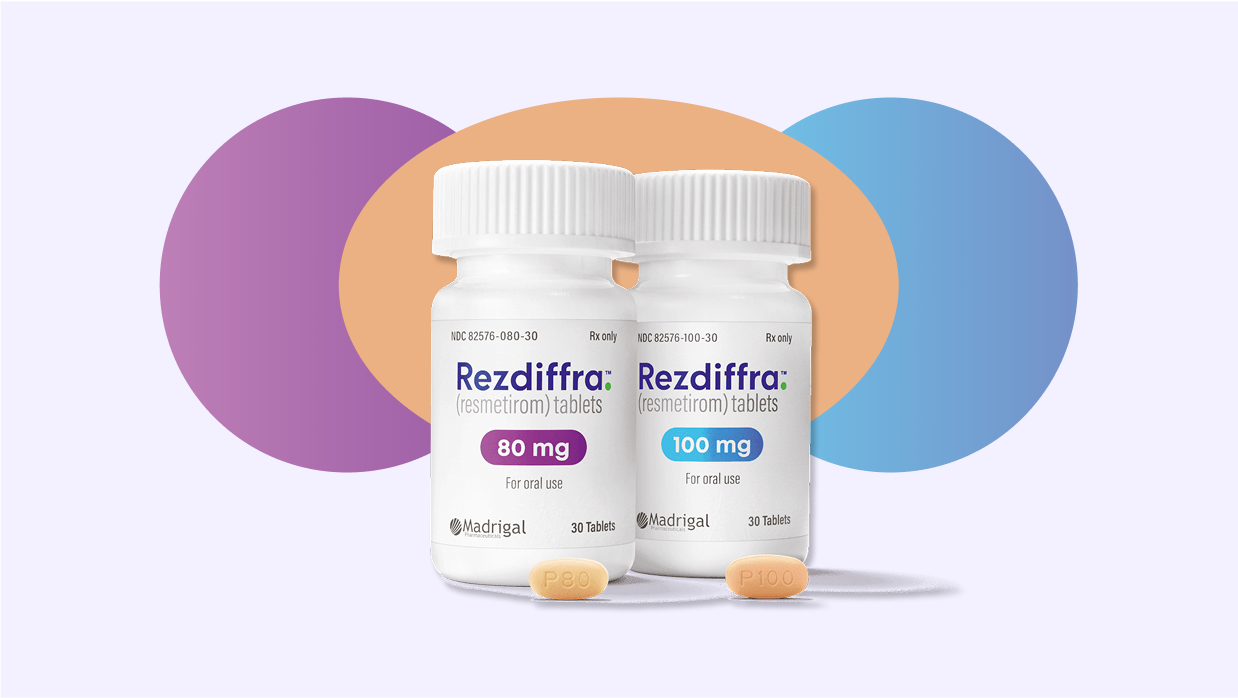

Madrigal Pharmaceuticals enters 2026 as the only company with an FDA-approved therapy for metabolic dysfunction-associated steatohepatitis with moderate to advanced liver fibrosis. Rezdiffra reached $958.4 million in net sales during its first full commercial year, growing from fewer than 18,000 patients in the first quarter of 2025 to more than 36,250 by year-end. That trajectory is real. The competitive clock attached to it is also real.
Baker Bros. Advisors, RTW Investments, Vanguard Group, BlackRock, Wellington Management Group, and Armistice Capital were among the institutional investors that tracked Rezdiffra’s commercial performance in 2025. Institutional holders account for approximately 98.5 percent of Madrigal shares outstanding.
The Competitive Field
MASH attracted drug development investment for years before Rezdiffra’s March 2024 approval, and the compounds behind it in the clinic did not stop advancing. Novo Nordisk sought regulatory clearance for semaglutide as a MASH treatment, building on the GLP-1 receptor agonist‘s demonstrated ability to reduce liver fat in metabolic disease trials. Akero Therapeutics presented Phase 3 data for efruxifermin showing cirrhosis reversal in 39 percent of treated patients versus 15 percent on placebo, a result that attracted attention among liver disease specialists and investors. Viking Therapeutics advanced VK2809 through Phase 2b trials with fibrosis improvement data, and additional candidates including efimosfermin alfa, icosabutate, and denifanstat carry readout timelines distributed across 2026 and 2027.
The nature of MASH creates room for multiple therapies rather than a winner-take-all outcome. The condition involves overlapping disease mechanisms, including fat accumulation, inflammation, oxidative stress, and fibrosis driven by separate pathways. No single drug is likely to address the full spectrum of disease activity for all patients. That structural complexity positions the first approved agent differently from a drug entering a category where one mechanism typically controls outcomes, and it creates the rationale for combination approaches that Madrigal has been building toward.
The Combination Pipeline
Three licensing transactions in 2025 added candidates designed for future use alongside Rezdiffra. MGL-2086, an oral GLP-1 receptor agonist derived from orforglipron, was licensed in September 2025 and is expected to enter clinical trials in the second quarter of 2026. GLP-1 agonism reduces liver fat through a different pathway than the THR-beta activation Rezdiffra provides, making the two mechanisms potentially additive in patients with more advanced metabolic dysfunction.
Ervogastat, a DGAT-2 inhibitor acquired through an exclusive global license, showed in Phase 2 that 72 percent of patients achieved at least a 30 percent reduction in liver fat and 61 percent achieved at least a 50 percent reduction. Madrigal plans a drug-to-drug interaction study with Rezdiffra in 2026 and FDA consultation on a Phase 2 combination trial design. DGAT-2 inhibition targets lipid synthesis in the liver from a different angle than THR-beta, adding another mechanistic layer to a potential combination regimen.
Six preclinical siRNA programs, licensed in February 2026, target gene silencing as a complementary mechanism to those the oral candidates address.
Patent Protection and the Cirrhosis Trial
A U.S. patent listed in the FDA Orange Book in August 2025 extends Rezdiffra’s patent protection to 2045, covering the commercial weight-threshold dosing regimen. That timeline gives Madrigal room to develop the combination pipeline and pursue additional approvals without facing generic or biosimilar pressure on the foundational asset.
The most consequential near-term clinical milestone is the Phase 3 MAESTRO-NASH OUTCOMES trial, testing Rezdiffra in patients with compensated MASH cirrhosis at the F4c fibrosis stage. Roughly 245,000 such patients are under specialist care in the United States, a population not covered by Rezdiffra’s current approved indication. Topline data is expected in 2027.
Two-year open-label extension data presented at major liver disease conferences in 2025 provided an early indicator. Among F4c patients with clinically significant portal hypertension at baseline, 65 percent moved into lower-risk categories by year two of treatment. Extension data and controlled trial data carry different evidentiary weight in the regulatory process, but the signal has been consistent enough to sustain analyst confidence in the OUTCOMES readout.
Nine analyst firms carried buy ratings on Madrigal stock as of early 2026, with a median price target of $640 across 11 firms, and B. Riley Securities set a target of $670. The 2026 guidance from the company implies continued robust net sales growth and expects gross-to-net dynamics to shift into the high-30 percent range as broader formulary contracting takes hold.

Comments are closed.