
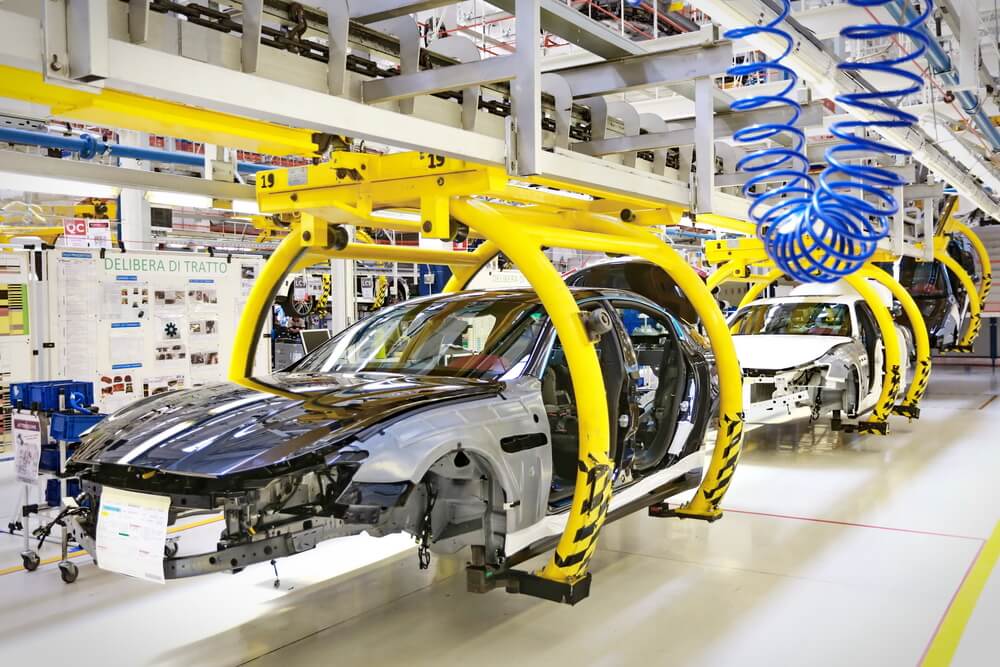

For decades, the automotive industry was hailed as the undisputed champion of operational efficiency. Original equipment manufacturers perfected the art of lean manufacturing, operating on precise just-in-time delivery schedules that minimized warehouse footprints and squeezed every cent out of component holding costs. In this synchronized global ballet, a transmission cast in Japan, microchips etched in Taiwan, and wire harnesses assembled in Eastern Europe or Mexico would arrive on assembly lines across North America or Western Europe within hours of their final installation.
That frictionless era has unraveled. A collision of structural shifts, geopolitical conflicts, regulatory mandates, and raw material shortages has turned automotive supply networks upside down. The modern passenger car is no longer a purely mechanical assembly of steel, rubber, and glass. Instead, it has morphed into a sophisticated computer on wheels. This evolution, combined with the global pivot toward electrified powertrains, has exposed profound vulnerabilities in global sourcing models. Automotive leaders now face the difficult task of dismantling brittle legacy networks and engineering resilient, flexible logistics architectures capable of withstanding constant global shockwaves.
The Lingering Semiconductor Vulnerability and Electronic Architecture
Modern vehicles demand unprecedented computing power. While an entry-level compact sedan manufactured two decades ago might have operated with fewer than thirty microcontrollers, contemporary software-defined vehicles, hybrid platforms, and battery-electric models often require thousands of specialized semiconductors. These microchips govern everything from anti-lock braking logic and powertrain calibration to touchscreens, active safety cameras, and battery thermal management systems.
The automotive sector operates at a structural disadvantage within the wider semiconductor marketplace. Unlike consumer electronics companies that order millions of cutting-edge silicon wafers on predictable annual cycles, automakers historically depended on older, mature manufacturing nodes ranging from twenty-eight nanometers to ninety nanometers. Semiconductor foundries prioritize high-margin, advanced-node processing chips for cloud servers, smartphones, and artificial intelligence infrastructure. Consequently, automotive orders often sit lower on the priority ladder.
Automotive qualification standards are exceptionally demanding. An electronic control unit must endure extreme temperature swings, mechanical vibration, and moisture across a fifteen-year operating lifecycle. Qualifying an alternate chip supplier or redesigning a printed circuit board to accept a replacement processor can take anywhere from twelve to eighteen months due to mandatory safety validations and crash compliance testing. This rigidity means that a shortage of a single five-dollar sensor or power management integrated circuit can bring a multi-billion-dollar assembly plant to a complete standstill, leaving thousands of nearly finished vehicles parked in staging lots waiting for final components.
Critical Mineral Scarcities in the Electric Vehicle Transition
The global automotive transition toward battery electric vehicles has shifted supply chain vulnerability from oil and precision mechanical tooling to the earth’s crust. Internal combustion drivetrains rely on abundant base metals like iron, aluminum, and copper. By contrast, high-energy-density lithium-ion battery packs demand immense volumes of specialized raw materials, including battery-grade lithium carbonate, nickel, cobalt, synthetic or natural graphite, and manganese.
The primary choke point in this ecosystem is not solely geological availability, but the severe concentration of chemical refining capacity:
-
Refining Bottlenecks: A single nation or narrow geographic region frequently controls the majority of the world’s chemical processing facilities for battery-grade minerals, regardless of where raw ores are mined.
-
Long Lead Times for New Mines: Bringing a new commercial lithium or nickel mining project from initial exploration to production typically takes seven to ten years due to environmental permitting, community consultations, and massive capital expenditures.
-
Geopolitical Resource Nationalism: Export limits, revised royalty structures, and state-directed mining policies in resource-rich nations create sudden supply deficits and volatile spot pricing for raw commodities.
-
Rare Earth Dependencies: High-efficiency permanent magnet synchronous motors rely heavily on rare earth elements such as neodymium, dysprosium, and terbium, whose global extraction and processing remain heavily concentrated in foreign hands.
Automakers have been forced into unfamiliar roles to guarantee access to these critical inputs. Rather than purchasing finished battery cells from external tier-one vendors, major automotive groups now ink direct multi-year offtake agreements with junior mining firms, invest directly in refining facilities, and establish vertical joint ventures to produce battery cells in-house.
The Collapse of Traditional Just-in-Time Logistics
Pioneered by Japanese automakers in the mid-twentieth century, just-in-time manufacturing treated warehouse inventory as an operational waste. The fundamental assumption behind this philosophy was that global transit networks were inherently reliable, cheap, and immune to catastrophic failure. Recent years have exposed the fragility of that premise.
International freight corridors face persistent friction. Maritime routes deal with recurring capacity constraints, route deviations around unstable marine choke points, port backlogs, and fluctuating container rates. On land, cross-border freight experiences severe driver shortages, equipment imbalances, and stricter border security inspections. When transit lead times swing unpredictably by weeks, holding only two or three days of safety stock becomes a dangerous liability.
Automakers are increasingly abandoning pure just-in-time strategies in favor of a just-in-case approach. Companies are intentionally building buffer inventories of essential micro-components, leasing regional warehouse spaces near assembly plants, and pre-purchasing critical raw materials. While this shift ties up significant working capital, the carrying cost of surplus components pales in comparison to the financial toll of shutting down an entire vehicle production line.
Geopolitical Fragmentation and the Rise of Regionalized Sourcing
The post-Cold War era of frictionless globalization has given way to an era marked by economic nationalism, tariff realignments, and strategic industrial policy. Governments worldwide now treat automotive manufacturing, software engineering, and battery production as pillars of national security and economic sovereignty.
Trade policies, domestic content requirements, and revised free trade accords have reshaped corporate decision-making. Automotive executives can no longer source components purely on the lowest unit cost. Instead, they must evaluate supply routes through the lens of tariff exposure, geopolitical stability, and regulatory compliance.
This paradigm shift is driving aggressive regionalization strategies across three main operational models:
-
Reshoring: Relocating critical component manufacturing, especially semiconductor packaging, advanced electronics, and software development, back to domestic soil.
-
Nearshoring: Moving production hubs closer to primary consumer markets, such as North American automakers expanding supplier clusters in northern Mexico or European firms investing in Central and Eastern Europe.
-
Friendshoring: Establishing strategic sourcing partnerships exclusively within allied nations that share stable diplomatic ties and predictable legal frameworks.
While regionalization insulates companies from cross-ocean transit interruptions, building localized supplier ecosystems is extraordinarily difficult. It requires billions of dollars in infrastructure investment, dependable local utility grids, and access to deep pools of skilled industrial labor that cannot be created overnight.
The Blind Spots of Multi-Tier Visibility
A modern vehicle contains between twenty thousand and thirty thousand individual parts. An original equipment manufacturer maintains direct contractual relationships with a few hundred Tier-1 suppliers, who deliver assembled modules like instrument clusters, braking systems, and seating arrangements. However, these Tier-1 providers rely on hundreds of Tier-2 component makers, who in turn depend on Tier-3 material suppliers and Tier-4 chemical processors.
Historically, automotive brand managers maintained virtually zero visibility beyond their direct Tier-1 vendors. Lower-tier suppliers frequently guarded their sourcing networks as proprietary business secrets, fearing that automotive purchasing departments would bypass them to squeeze their profit margins. This opacity creates severe operational blind spots.
A localized fire at a specialized resin facility, a labor strike at a minor stamping plant, or a flood affecting a single rubber gasket maker can quietly paralyze the production of an entire automotive group. When a crisis occurs deep within Tier-3 or Tier-4 networks, vehicle manufacturers often learn of the problem only when shipments fail to arrive at the assembly dock.
To combat this vulnerability, automakers are investing heavily in advanced supply chain software, digital twin simulations, and secure data-sharing consortiums. These platforms track parts at the sub-tier level, map single-source dependencies, and use predictive monitoring to alert procurement teams to upstream supply risks weeks before they disrupt factory schedules.
Sustainability Mandates and Upstream Traceability
Environmental, social, and governance regulations are fundamentally changing how automotive supply chains are structured and audited. Automotive companies face intense regulatory pressure not just to produce zero-tailpipe-emission vehicles, but to clean up the carbon footprint and labor practices embedded across their entire industrial life cycle.
New legal frameworks require stringent supply chain due diligence:
-
Scope 3 Carbon Tracking: Regulatory reporting increasingly requires automakers to account for upstream emissions generated during the mining, smelting, and shipping of raw steel, aluminum, and battery compounds.
-
Anti-Forced Labor Regulations: Customs enforcement agencies regularly detain inbound shipments of auto parts, wiring components, and electronic modules if importers cannot prove their raw materials were sourced without exploitative labor practices.
-
Battery Passports and Circularity: Emerging industrial mandates require comprehensive digital tracking for traction batteries, documenting the precise origin of raw elements, recycled content ratios, and safe end-of-life recycling pathways.
Achieving total upstream traceability requires unprecedented documentation and technological coordination. Automakers must trace mineral lots from the mine shaft through refining facilities, chemical synthesis, cell production, and final integration. Companies that fail to establish robust traceability systems face severe regulatory fines, import seizures, and catastrophic brand reputational damage.
Building Strategic Resilience for the Next Generation
The global automotive sector has arrived at an irreversible turning point. The traditional playbook of hyper-lean logistics, extreme global fragmentation, and single-source procurement is obsolete in an era defined by geopolitical friction and accelerated technological transitions.
Navigating the future demands structural flexibility. Winning automotive manufacturers are those that actively diversify their supplier bases, invest in digital transparency across every tier, design modular electronic architectures that can adapt to changing silicon availability, and form genuine operational partnerships with their suppliers. Transforming automotive supply chains from fragile, cost-optimized pipelines into agile, shock-resistant networks is an expensive and intricate undertaking. Yet, for an industry navigating the most dramatic evolution in its history, it is the only viable path forward.
Frequently Asked Questions
What does the term bullwhip effect mean in the context of automotive manufacturing?
The bullwhip effect describes how small shifts in end-consumer vehicle demand become amplified into massive, distorted order fluctuations as they travel upstream through the supply chain. When retail sales dip slightly, dealerships cut new inventory orders. Vehicle manufacturers respond by drastically reducing parts orders to Tier-1 suppliers. Tier-1 and Tier-2 suppliers then slash raw material and semiconductor orders even further. When consumer demand inevitably rebounds, upstream suppliers cannot restart production quickly enough, triggering acute component shortages and extreme pricing volatility across the industry.
Why is designing modular vehicle architecture helpful for managing supply chain disruptions?
Modular architecture allows engineers to standardize component dimensions, electrical pinouts, and software protocols across multiple vehicle lines. When an unexpected supply bottleneck strikes a specific component, modularity gives automakers the flexibility to substitute an alternative part or install a slightly different processor without re-engineering the entire vehicle chassis or spending a year rewriting core software code. This structural adaptability keeps assembly lines running while single-source production setups would be forced to halt.
How do modern automotive paint and coating processes create unexpected supply vulnerabilities?
Automotive coatings require specialized chemical inputs, including specialized resins, pigments, curing agents, and titanium dioxide. The industrial chemical sector is highly consolidated, with only a small number of global chemical processing plants producing the high-purity chemical bases that automotive finishes require. An industrial explosion, prolonged freeze, or chemical plant shutdown can suddenly cut off the supply of specific vehicle exterior colors or protective e-coat primers, halting finished vehicle output even if all mechanical components are fully stocked.
In what ways does the transition to software-defined vehicles reduce mechanical supply chain complexity?
Software-defined vehicles replace multiple discrete, single-function mechanical systems with integrated software controls and centralized domain computers. For instance, physical switches, heavy analog wiring bundles, and independent mechanical relays are consolidated into lightweight electrical harnesses and unified touch interfaces. This structural consolidation eliminates hundreds of individual mechanical part numbers, reducing physical bill-of-materials complexity, trimming vehicle curb weight, and simplifying factory inventory management.
How does shipping finished electric vehicles differ logistically from transporting internal combustion cars?
Electric vehicles present unique logistical challenges due to their mass and energy storage systems. High-capacity traction batteries make electric vehicles roughly twenty to thirty percent heavier than their gas-powered equivalents, which reduces the total number of vehicles a standard car carrier or railcar can safely carry under highway and rail weight limits. Furthermore, because large lithium-ion battery packs are legally categorized as hazardous materials, shipping electric vehicles via maritime roll-on/roll-off vessels requires specialized fire suppression protocols, dedicated deck spacing, and rigorous temperature monitoring.
What role will automotive closed-loop recycling play in stabilizing raw material supplies?
Closed-loop recycling allows automakers to recover battery-grade metals and high-purity automotive aluminum directly from end-of-life vehicles and factory scrap, feeding those materials directly back into new component production. As the first generation of modern electric vehicles reaches retirement, recycling infrastructure will yield significant volumes of domestic nickel, cobalt, and lithium. This domestic circular pipeline reduces reliance on newly mined foreign ores, insulates manufacturers from geopolitical trade barriers, and significantly lowers lifecycle carbon emissions.

Comments are closed.