
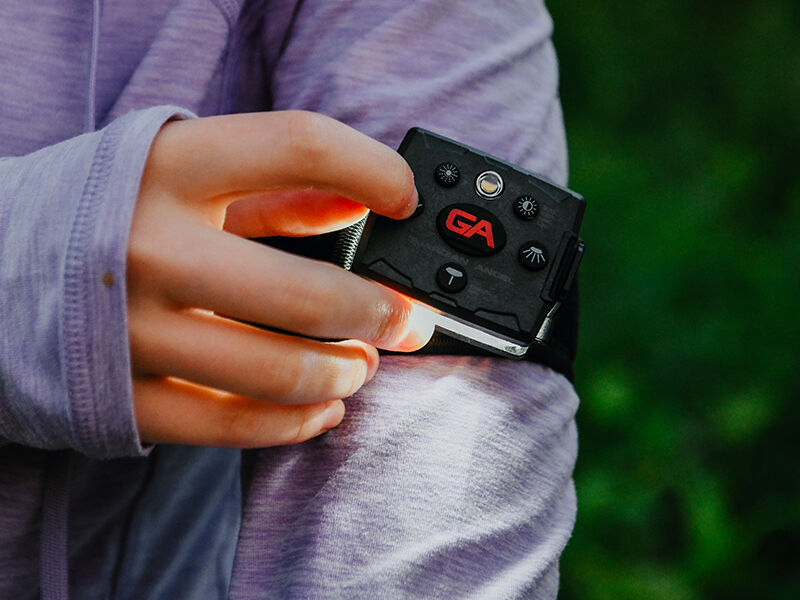

Your kids are delicate. They need more safety than adults. A child’s wearable safety light provides them with proper illumination and safety while playing, cycling or returning from anywhere in darkness. Wearable lights are their safety gear, offering personal illumination when they need proper visibility, whether it’s bad weather or a low-light environment. So, choose a good child wearable safety light to enhance visibility and protect from potential hazards.
Wearable lights are devices for personal illumination that are worn on the body or on clothing. They provide hands-free illumination and enhance visibility, particularly in poorly lit settings. These electronic devices improve the wearer’s visibility of their environment and their chances of being noticed by others, which enhances convenience and safety in general.
Uses for Wearable Lighting
Wearable lights are useful for a variety of tasks, especially when there is a lack of natural light. These lights increase visibility to drivers and other pedestrians, preventing accidents by providing people enough time to react when kids are exercising outside by running, walking, or cycling. Wearable lights improve safety in various contexts besides recreation. They illuminate the landscape and help hikers and campers avoid falls by guiding them through routes and campsites after dark. When walking to or from school, children can wear them on their backpacks or clothes to make themselves more visible to vehicles.
Wearable Lighting Types
There are various types of wearable lights, and each has unique benefits for various applications. When worn on the head with elastic straps, headlamps give hands-free illumination that points in the direction the wearer is looking, making them useful for jobs or path navigation. Chest-mounted lights provide a central source of light and are commonly placed to both indicate the wearer’s presence to others and light the ground directly in front of them.
Smaller, more adaptable choices consist of:
- Leg and arm bands that encircle limbs to offer 360-degree visibility frequently include flashing modes to draw attention.
- Clip-on lights are small, flexible devices that can be fastened to bags, waistbands, or clothing.
- Vests with lights built right into the reflective material maximize visibility from a variety of perspectives.
- Shoe clips, which fasten to shoes, increase the visibility of the wearer’s foot movements.
Key Features to Consider
A number of features affect wearable lights’ performance when choosing them. The entire amount of visible light output is indicated by brightness, which is measured in lumens. For urban vision, 100–300 lumens is enough, while greater lumen counts (400–800 for headlamps, for example) illuminate larger regions or farther distances. Additionally, excessive brightness can glare at other people or be distracting.
Important factors to consider are battery life and type. Rechargeable lithium-ion batteries, usually with USB charging connectors, are a common feature of contemporary wearable lights, providing convenience and cutting down on waste. Depending on the brightness mode, they have runtimes of four to twenty hours. Coin cells or AAA batteries, which are easily replaced but add to ongoing expenses, are still used in some lights.
Different light modes increase adaptability; steady beams provide constant illumination, while strobe or flashing modes work well for improving visibility and preserving battery life. Users can modify output according to ambient light conditions by varying the brightness settings.
Finally, weight and comfort have a direct effect on usability, particularly when exercising. Lightweight designs lessen bounce and perceived heaviness; some weigh as little as 2 ounces or 14 grams. The device will stay in place for lengthy periods of time without chafing or becoming uncomfortable thanks to a well-thought-out strap system or secure clip.

Comments are closed.